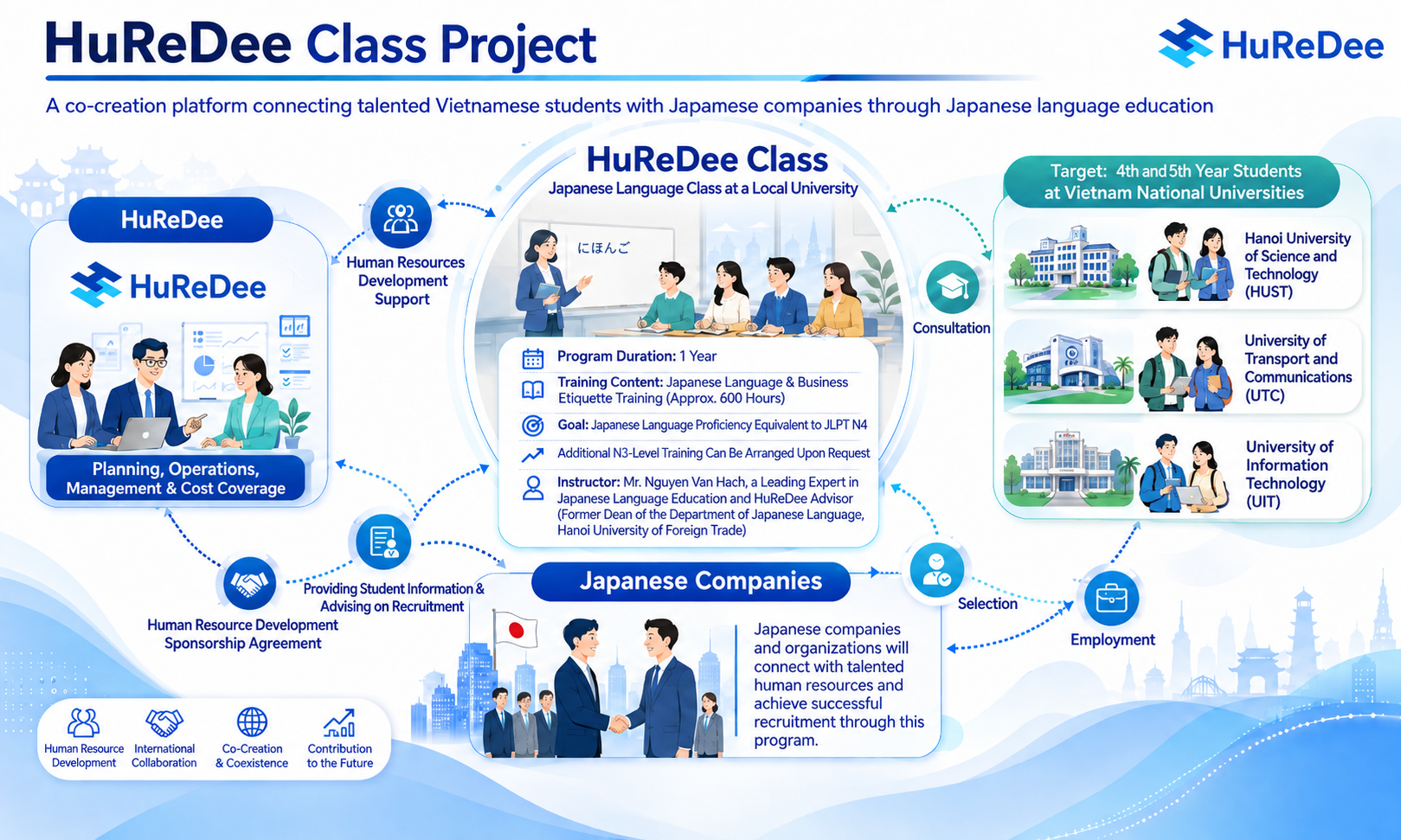
University Partnerships & HuReDee Class Program
A Talent Development Project Connecting Vietnamese Universities with Japanese Companies
HuReDee collaborates with universities in Vietnam specializing in a wide range of fields, including engineering, transportation and construction, and information technology.
With Hanoi University of Science and Technology (HUST), the University of Transport and Communications (UTC), and VNUHCM – University of Information Technology (UIT) as key examples, we are expanding our partnerships to institutions such as Ho Chi Minh City University of Technology (HUTECH) and the Vietnam-Japan Institute of Technology (VJIT).
Through these partnerships, we provide talent development and career support tailored to the strengths of each university and the specialized expertise of its students.
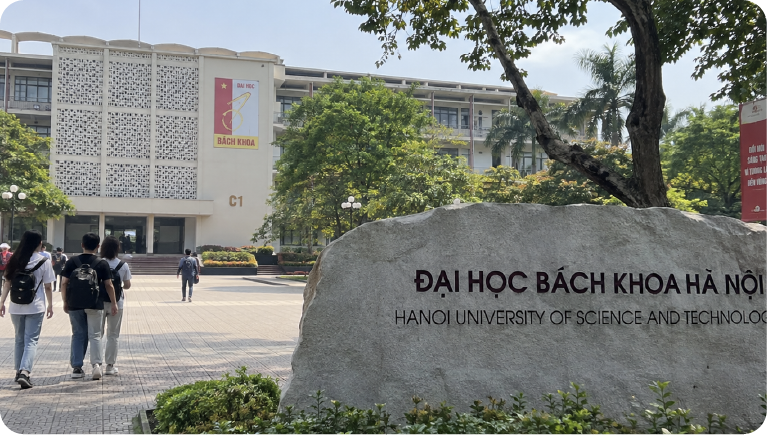
Hanoi University of Science and Technology (HUST)
Joint Research Model
- Period
- December 2024 – December 2025
- Number of students
- 23
- Fields of study
- Mechanical Engineering, Electrical and Electronic Engineering, Information and Communications Technology
- Preferred career fields
- Primarily manufacturing-related positions(Design, Production Management, CNC/PLC Technologies, Data Analysis, etc.)
- Semiconductor-related fields
- Electrical and Electronic Engineering
Material Sciences/Engineering Physics

University of Transport and Communications (UTC)
Customized Model
- Period
- October 2025 – September 2026
- Number of students
- 30
- Fields of study
- Civil Engineering & Architecture, Electrical Engineering, Mechanical Engineering
- Preferred career fields
- Primarily civil engineering and construction, electrical installation, and automation systems
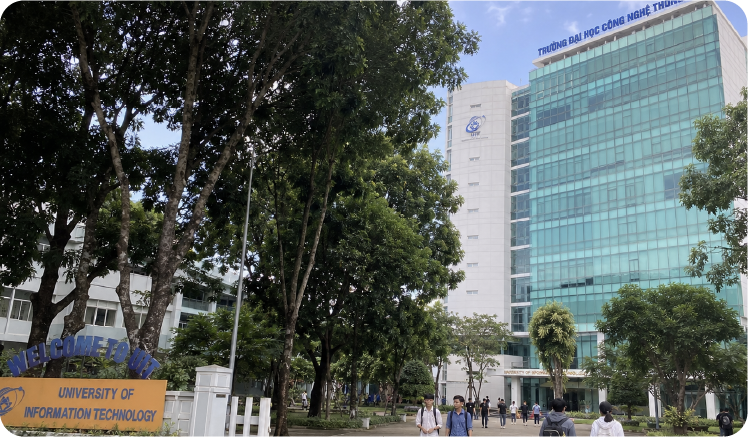
VNUHCM – University of Information Technology (UIT)
Customized Model
- Period
- January 2025 – November 2026
- Number of students
- 30
- Fields of study
- Information Systems, Software Engineering, Data Science
- Preferred career fields
- Software & Web Development, AI Engineering, Data Analysis
- Semiconductor-related fields
- Computer Engineering / IC & Hardware Design

Standard Approach(Conventional Model)
A plan in which companies select potential candidates based on student profiles and proceed with interviews and discussions toward employment.
- HuReDee recruits students who are interested in working for Japanese companies and organizes them into HuReDee classes.
- Companies review student profiles, select potential candidates, and conduct interviews to explore employment opportunities.
- Employment conditions, job responsibilities, and other details are discussed and coordinated to facilitate successful recruitment.
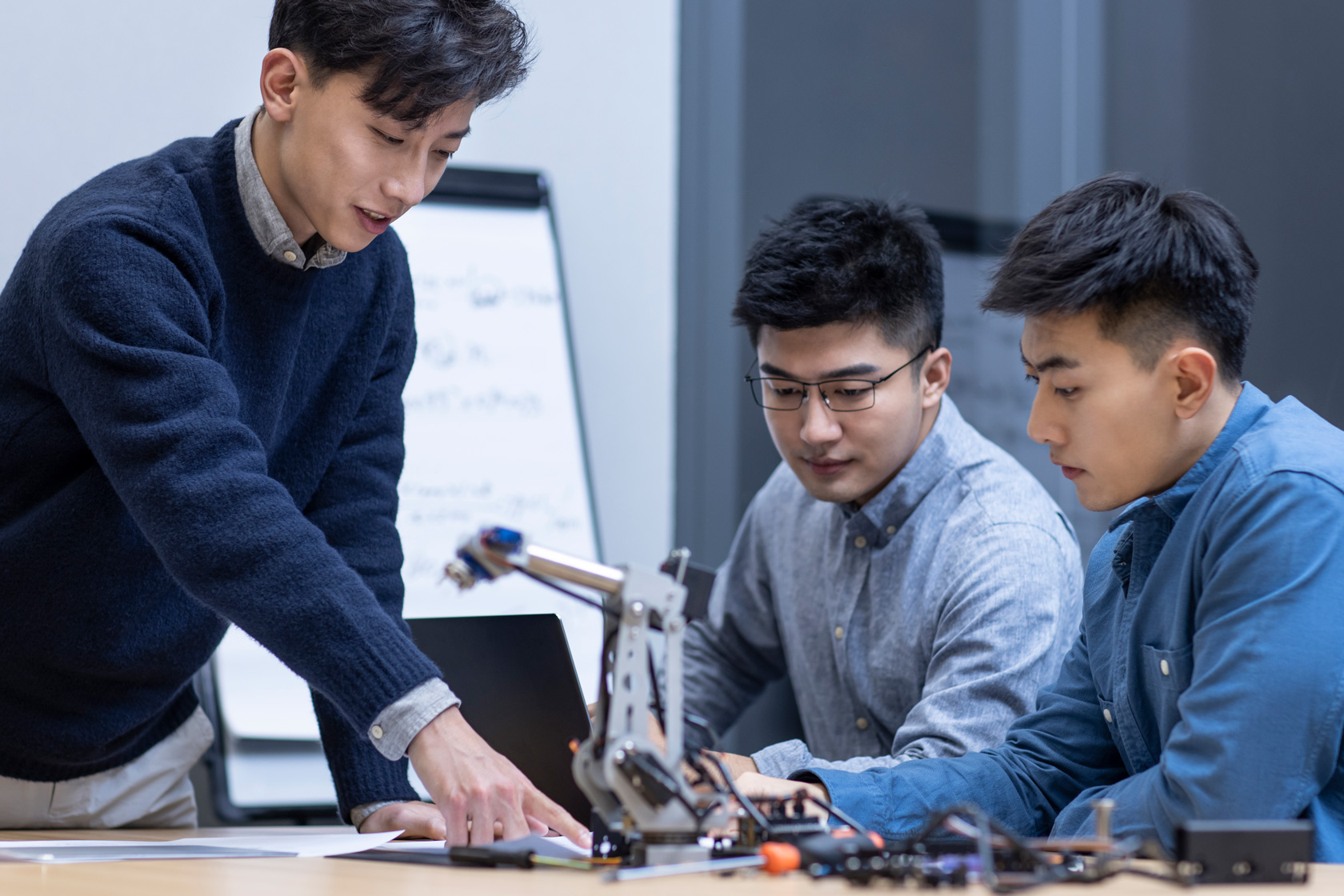
Needs-Based Approach(Customized Model)
A plan in which students are recruited and trained according to the specific skills, expertise, and talent requirements of each company.
- HuReDee recruits and selects students based on the company’s required areas of expertise and candidate profile.
- In addition to Japanese language education, HuReDee supports students in acquiring the specialized knowledge and skills required for their future roles.
- While monitoring their learning progress, HuReDee creates opportunities for companies to connect with candidates who match their recruitment needs.

Collaborative Research Approach(Industry–Academia Collaboration Model)
A plan in which universities, students, and companies work together on research and projects, leading to talent development and potential recruitment.
- Based on the company’s business challenges and opportunities for new initiatives, HuReDee designs collaborative programs involving universities and students.
- HuReDee serves as a coordinator among universities, students, and companies, supporting the implementation and progress of joint research and projects.
- In addition to generating research outcomes, these initiatives are designed to lead to future recruitment opportunities and long-term collaboration.